LMSS Meaning in Text: What Does LMSS Mean?
Scrolling through your feed and someone drops “LMSS” in your DMs? You’re not the only one squinting at the screen. This tiny four-letter combo has been popping up everywhere lately — Snapchat stories, group chats, TikTok comments — and it’s leaving a lot of people confused.
Slang like this spreads fast because it’s short, catchy, and easy to type. But that speed comes at a cost: nobody explains what it means before it goes viral. One day you’re fine, the next day your whole group chat is using letters you’ve never seen strung together like that.
This guide breaks down everything about LMSS — what it stands for, where it came from, how it’s used across different apps, and how you should reply when someone sends it your way.
LMSS Meaning at a Glance
| Detail | Explanation |
| Full Form | Like My Status, Share |
| Category | Internet/text slang |
| Tone | Casual, friendly, engagement-seeking |
| Common Platforms | Snapchat, Instagram, TikTok, WhatsApp, Facebook |
| Popular With | Teens, Gen Z, young millennials |
| Formal Use? | No — avoid in professional messages |
What Does LMSS Mean in Text?
At its core, LMSS is a quick way of asking friends or followers to interact with a post. Instead of typing out a full request, people shorten it into an easy-to-send acronym that fits the fast pace of texting and social media.
It shows up most often attached to a status update, story, or post — basically a nudge saying “notice me” without spelling that out directly.
What Does LMSS Stand For?
The most widely recognized meaning is straightforward: it’s a request for people to like a status and pass it along by sharing it. Someone posts an update, adds “LMSS,” and hopes their friends will engage with it and help it spread further.
It works like a mini call-to-action, similar to how creators ask viewers to “like and subscribe,” just condensed into a slang term that fits texting culture.
Why People Use LMSS
People lean on abbreviations like this for a few simple reasons:
- Speed – typing four letters is quicker than writing a full sentence.
- Casual tone – it keeps a conversation light and informal.
- Engagement boost – asking directly for likes and shares increases visibility.
- Trend participation – using popular slang makes someone feel current and socially plugged in.
Wanting interaction online isn’t unusual. People post because they want to feel seen, and LMSS is just a shorthand way of asking for that acknowledgment.
How LMSS Is Used in Text Messages
LMSS typically appears attached to a status, post, or story caption. It can be used playfully among close friends or more broadly on public posts aimed at a wider audience.
Real Chat Examples
- “Just posted a new pic! LMSS 💕”
- “Feeling proud of this one, LMSS friends!”
- “New update dropped — LMSS if you’re rocking with me”
- “Big news coming soon, LMSS for now”
Notice how none of these examples demand a reply — they’re an open invitation. If someone sees your message and wants to support you, they’ll like and share it. There’s no pressure attached.
LMSS Meaning on WhatsApp, Snapchat, Instagram, TikTok & Facebook
Each platform gives LMSS a slightly different flavor, even though the core meaning stays consistent.
LMSS Meaning on WhatsApp
On WhatsApp, LMSS shows up mostly in group chats or status updates. Since WhatsApp status works similarly to Instagram stories, people use LMSS to encourage friends to check out and react to what they’ve posted.
LMSS Meaning Snapchat
Snapchat is arguably where this term thrives most. Users post it directly on their story to nudge friends toward liking or responding, since Snapchat’s format is built around quick, temporary content that needs fast engagement.
LMS Meaning Text Slang TikTok
TikTok comment sections often use the shorter version, LMS, to ask viewers to like a comment or clip. Creators may add it in captions to encourage viewers to show support quickly, without needing a lengthy explanation.
LMSS Meaning on Instagram
On Instagram, LMSS commonly appears in captions or comments, asking followers to like the post and share it to their own story or feed, helping the content reach a bigger audience.
LMSS Meaning on Facebook
Facebook was actually one of the earliest homes for this kind of phrase, since status updates and shares have long been core features of the platform. Older slang culture around “like and share” posts helped LMSS take shape in the first place.
LMSS vs Similar Slang
It’s easy to mix LMSS up with other, similar-looking acronyms. Here’s a quick comparison:
| Acronym | Meaning | Difference from LMSS |
| LMS | Like My Status | Asks only for a like, not a share |
| LMK | Let Me Know | Requests information, not engagement |
| HMU | Hit Me Up | Invites direct conversation |
| LMAO | Laughing My *** Off | Expresses laughter, unrelated to posts |
Other Meanings of LMSS
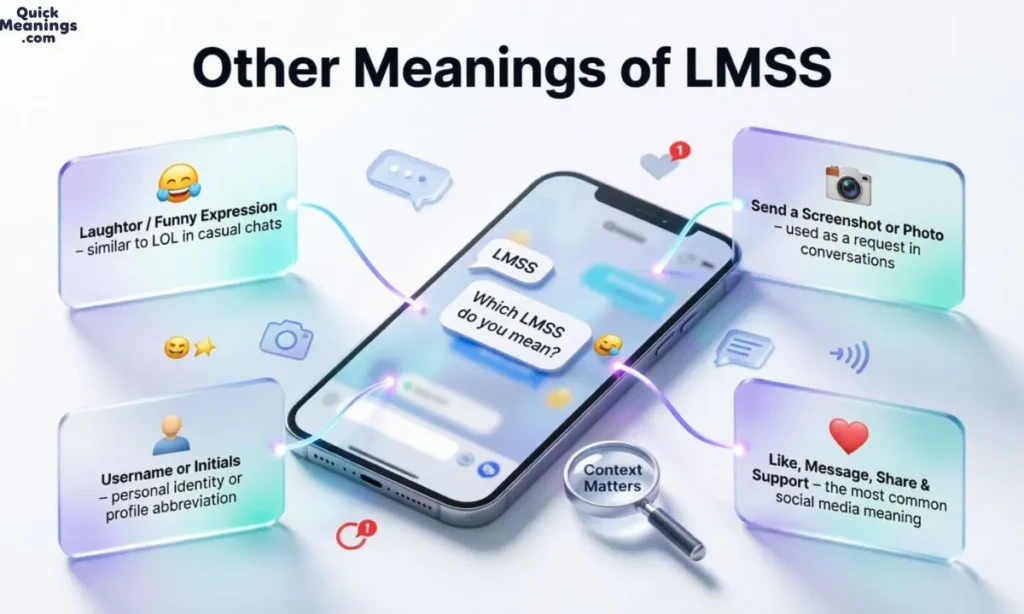
Slang rarely has just one definition, and LMSS is no exception. Depending on the group chat or platform, you might come across other interpretations, including:
- A joking, laughter-related expression similar to LOL in some casual circles
- A request for someone to send a screenshot or photo
- An identity label or username initials in unrelated contexts
Context is everything. If someone posts LMSS on a status update, it almost always ties back to the “like and share” meaning. If it shows up mid-conversation with no post attached, it’s worth reading the surrounding message to figure out the intended meaning.
How to Reply to LMSS
There’s no strict rule for responding, but here are a few natural ways to react:
- Simply like the post — that alone satisfies the request.
- Share it to your own story or feed if you genuinely enjoyed it.
- Comment something supportive like “done!” or a quick emoji.
- Ignore it if you’re not interested — no reply is required.
Common Mistakes When Using LMSS
- Using it in professional emails or workplace chats
- Assuming it always means the same thing regardless of context
- Overusing it so often that friends start ignoring the request
- Sending it to someone unfamiliar with texting slang, causing confusion
Tips for Using LMSS Correctly
- Save it for casual conversations with friends who understand slang
- Pair it with an emoji to soften the tone
- Avoid sending it to older relatives, teachers, or coworkers
- Use it sparingly so it doesn’t come across as attention-seeking
LMSS Meaning in Text From a Girl
When a girl sends LMSS, it’s usually a friendly, casual request for support on her post — nothing deeper than wanting engagement from her circle.
LMSS Meaning in Text From a Boy
Similarly, when a guy uses it, it typically carries the same lighthearted meaning: asking friends to like and share something he’s posted, without any hidden agenda.
Don’t Miss: IMK Mean in Text
Where LMSS Is Commonly Used
LMSS mostly lives within casual digital spaces — group chats, status updates, and social captions. It rarely appears in:
- Business or work emails
- Academic writing
- Formal customer service messages
It thrives specifically where casual, fast-paced communication is the norm.
Frequently Asked Questions
What does LMSS mean in text?
It usually means “Like My Status, Share,” a casual request for engagement on a post.
Is LMSS the same as LMS?
Not exactly — LMS typically means “Like My Status,” while LMSS adds the request to share as well.
Is LMSS considered rude?
No, it’s a lighthearted, informal request and isn’t meant to come across as demanding.
Can I use LMSS in a work chat?
It’s best avoided in professional settings since it’s purely casual internet slang.
Do I have to reply if someone sends me LMSS?
No, it’s simply an invitation. You can like, share, or ignore it — there’s no obligation.
Where is LMSS used most?
It’s most common on Snapchat, Instagram, TikTok, WhatsApp, and Facebook.
Conclusion
LMSS is a simple slang term that boils down to one thing asking friends to like a status and share it further. It’s become part of everyday digital language because it saves time and keeps conversations light and casual.
Next time you spot LMSS on someone’s story or post, you’ll know exactly what they’re asking for. Whether you choose to like it, share it, or simply scroll past, understanding the meaning means you’ll never feel lost in a chat again.