
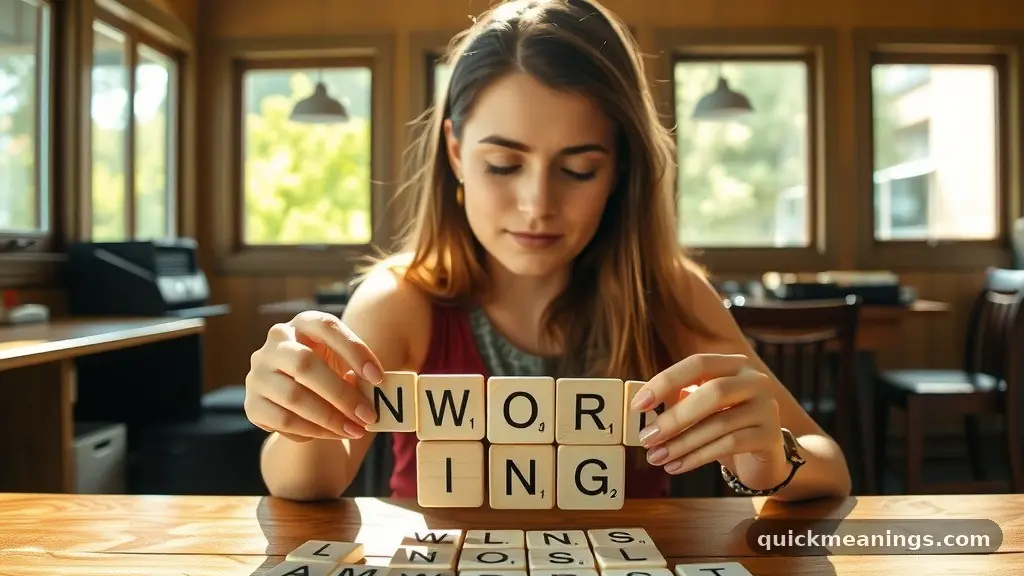
Finding the right strategy for the daily word game can be tricky, especially when you are looking for a reliable Mashable Connections hint today to keep your streak alive. Many players find themselves stuck on the final category, staring at sixteen words that seem to have no logical connection.
This article provides the clarity you need to decode the grid, understand the underlying themes, and improve your overall performance in the game. By examining how these puzzles are constructed, you will gain a deeper appreciation for the linguistic patterns that define this popular daily challenge.
The primary answer for today’s puzzle involves identifying four distinct groups of four items based on shared, often subtle, associations. If you are struggling with a specific grid, look for words that might belong to multiple categories, as these are often “red herrings” designed to trip you up.
The game asks you to sort these sixteen words into four categories of four, labeled by difficulty levels: yellow, green, blue, and purple. Always start by scanning for obvious synonyms or clear thematic links before committing your guesses to the board.
Understanding the Mechanics of the Daily Puzzle
The game is built on the concept of lateral thinking, where words might be related by definition, origin, or common usage in phrases. Unlike a standard crossword, you are not looking for definitions but rather for the hidden threads that tie seemingly unrelated terms together.
The challenge lies in the fact that many words have multiple meanings, and the designers frequently include items that could fit into two different potential groups. You must be precise, as you only have four attempts to solve the board correctly.
Success often comes down to identifying the “trap” words early in your session. These are terms that feel like they belong to a group but are actually placed there to bait you into making an incorrect selection.
Once you identify a group of four that fits perfectly, the remaining twelve words become significantly easier to analyze. Take your time to group the words mentally before you click the submit button, as a wrong guess consumes one of your precious four lives.
Decoding the Color-Coded Difficulty Levels
The four categories are organized by color, which serves as a general indicator of how obscure the connection might be. Yellow is typically the most straightforward category, often involving simple synonyms or direct associations that are easy to spot.
Green usually requires a bit more thought, perhaps involving specific categories like types of tools, historical figures, or common household items. Blue and purple categories are where the puzzle gets significantly more difficult, often involving wordplay or idioms.
Purple, in particular, is notorious for being the “trick” category that requires you to think outside the box. It might involve words that all follow a specific prefix or words that are all missing a certain letter to form a new term.
If you find yourself with four words that don’t seem to fit anywhere else, they likely belong to the purple category. Don’t be afraid to leave those for last, as the process of elimination is one of your most powerful tools in this game.
Strategic Approaches to Word Association
Effective players don’t just look at the words; they look at the relationships between them. When you see a list of terms, try to determine if they are nouns, verbs, or adjectives, as this can narrow down the potential categories immediately.
If all sixteen words are nouns, you might be looking at a category based on physical properties or historical context. If the words are all verbs, you are likely looking for actions or processes that link them together.
You can also use a process of elimination to refine your guesses. If you suspect three words belong to a group but aren’t sure about the fourth, look at the remaining words on the board to see if any of them share the same trait.
Sometimes, the fourth word is a subtle variant that you might have overlooked in your initial scan. Keep a list of your potential groupings on a piece of paper if you find it easier to visualize the connections away from the screen.
The Role of Context in Modern Word Games
Context is everything when it comes to solving these puzzles, especially when you encounter words that have multiple interpretations. For example, the word “bank” could refer to a financial institution, a river edge, or a maneuver in an airplane.
You must determine which context is being used by looking at the other three words in the potential group. If the other words are “river,” “stream,” and “tide,” the context is clearly geographic.
This is why reading the entire list before making your first move is essential for long-term success. If you jump in too quickly, you might misinterpret a word’s meaning and waste a guess.
The designers of the puzzle often play with these dual meanings, so always double-check your logic. If you are ever truly stumped, you can consult the official NYT Connections page to see the official categories after you have exhausted your own attempts.
Common Patterns and Linguistic Clues
Many puzzles rely on recurring patterns that seasoned players eventually learn to recognize. These patterns might include words that all rhyme, words that are all palindromes, or words that are all related to a specific holiday or event.
For instance, around a time like the first Monday in September, you might see categories related to labor, rest, or seasonal transitions. Keep an eye out for these seasonal or cultural markers, as they are a common source of inspiration for the puzzle setters.
Another common pattern is the “fill-in-the-blank” category. This is where all four words can be completed by adding a specific word before or after them to create a new phrase.
For example, if you see “ball,” “cake,” “house,” and “time,” they might all be linked by the word “pan” or “work.” Identifying these phrase-based connections is a skill that improves significantly with daily practice.
Managing Your Guesses Effectively
Since you are limited to four mistakes, managing your guesses is almost as important as solving the categories. If you are feeling unsure about a potential group, hold off on submitting it until you have more evidence.
It is better to spend an extra five minutes analyzing the board than to lose a life on a hunch that doesn’t pan out. Use the “shuffle” button frequently to change your perspective on the grid; sometimes, a different visual arrangement helps you spot a connection you missed.
If you have two potential groups that both seem plausible, analyze the remaining eight words. Often, one of the two groups will be impossible to complete if you make the wrong choice, revealing your error before you even hit submit.
This logical check is the hallmark of a high-level player. Treat your guesses as a finite resource and reserve them for when you have a high degree of confidence in your grouping.
Comparison of Difficulty by Category Type
To better understand how to approach the grid, consider this breakdown of typical category types you might encounter.
| Category Type | Difficulty Level | Strategy |
|---|---|---|
| Direct Synonyms | Easy (Yellow) | Look for words with identical meanings. |
| Thematic Groups | Medium (Green) | Identify items that belong to a shared set. |
| Idiomatic Phrases | Hard (Blue) | Find words that complete a common saying. |
| Wordplay/Morphology | Very Hard (Purple) | Analyze suffixes, prefixes, or letter patterns. |
Frequently Asked Questions
How can I get better at solving these puzzles daily?
The best way to improve is through consistent practice and by training your brain to look for multiple meanings. Pay attention to the categories you missed and try to understand the logic behind them once the solutions are revealed.
Is there a specific time of day when these puzzles are released?
The puzzle is typically refreshed at midnight in your local time zone. Checking it early in the morning can be a great way to start your day, though some players prefer to tackle it during a lunch break.
What should I do if I am down to my last life?
If you are on your last attempt, stop guessing. Take a break, walk away from the screen, and come back with fresh eyes. Often, the solution is much simpler than you think once you stop forcing connections.
Why do some words seem to fit in two different categories?
This is an intentional design choice known as a “red herring.” The puzzle setters want to challenge your ability to distinguish between strong and weak associations. Always look for the four words that fit a category perfectly rather than just “mostly.”
Can I see previous puzzle solutions?
Yes, most archives for these games allow you to look back at previous days. Reviewing past puzzles is a highly effective way to learn the common tropes and patterns used by the creators.
Conclusion
Mastering the daily word challenge is a rewarding exercise that sharpens your lateral thinking and vocabulary. By consistently checking for a reliable Mashable Connections hint today, you can learn to spot the patterns that make these puzzles both challenging and fun. Remember that every grid is a new opportunity to refine your logic and patience.
Whether you are playing for the first time or you are a seasoned veteran, the key is to stay curious and enjoy the process of discovery. Feel free to share your own strategies or favorite categories with others, and keep challenging yourself to find those hidden connections every single day.