
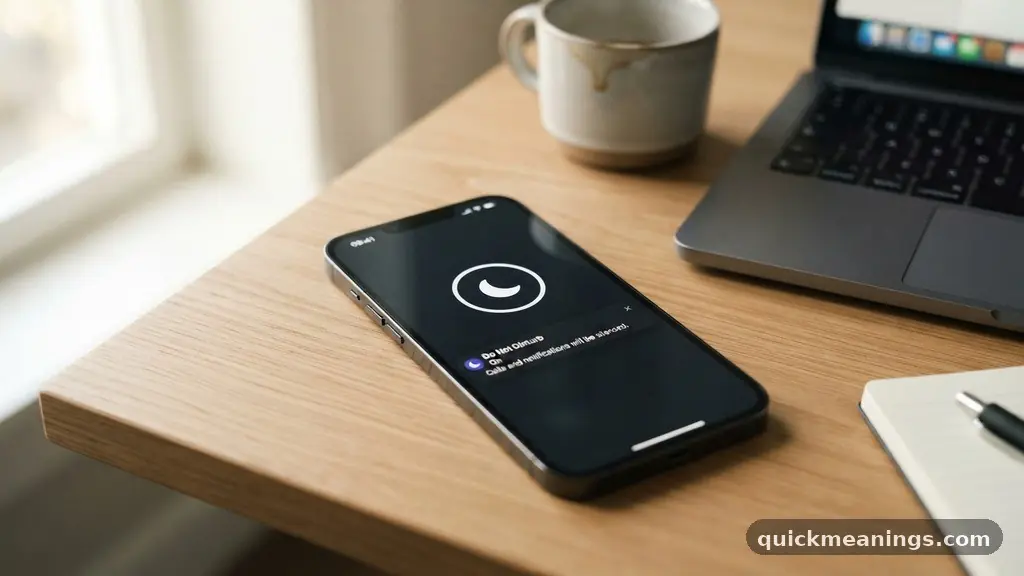
The DND meaning in text (2026) is fundamentally rooted in the digital age’s need for boundaries, primarily representing the phrase “Do Not Disturb.” As our lives become increasingly tethered to constant notifications and instant messaging, this simple acronym has evolved from a basic system setting into a nuanced piece of internet slang. Understanding how people use this term helps you interpret social cues, respect digital space, and manage your own availability.
Whether you are seeing it on a status update or receiving it as a direct reply, knowing the context is essential for modern communication. This exploration covers exactly what it means, how it varies across platforms, and why it remains a staple of our online interactions.
Defining the Primary Meaning of DND
At its core, the DND meaning in text (2026) is an abbreviation for “Do Not Disturb.” This term originated from mobile operating systems like iOS and Android, which feature a specific mode that silences calls, alerts, and notifications. When someone sends you a message saying they are on “DND,” they are signaling that they are currently unavailable or busy.
This is not necessarily a sign of hostility or avoidance. Instead, it serves as a polite way to set a boundary without needing a long explanation.
By using this acronym, a person informs their contacts that they are focusing on work, sleep, or personal time. It has become a standard shorthand that avoids the need for a formal “I cannot talk right now” message.
You will often see this in status updates on platforms like WhatsApp, Discord, or Instagram. It acts as a digital “closed” sign on a store door.
Most people use it to manage their mental health by reducing the anxiety associated with constant pings and vibrations. It effectively communicates that they are unplugged from the digital world for the time being.
How DND Functions in Modern Texting
In the realm of casual texting, the use of DND has expanded beyond just a system state. People now send the acronym to explain why they might be slow to reply to a thread. If you send a message and receive a short “DND” back, it is a clear indicator that the recipient is occupied.
This usage is part of a broader shift in how we handle communication tips in the digital era. We are moving away from the expectation of 24/7 availability.
By stating they are in DND mode, a friend or colleague is asserting their right to disconnect. It is a way to maintain a relationship while also prioritizing one’s own immediate needs.
However, the context of the conversation matters significantly. If a close friend sends you a DND notification, it is likely a temporary state.
If you see it frequently from someone you are trying to reach for work, it might imply that they prefer a more structured, scheduled approach to communication. Always look at the timing and the relationship to interpret the intent correctly.
The Dual Meaning: Dungeons & Dragons
While “Do Not Disturb” is the most common interpretation, you must be aware of the context of the related DND meaning in text (2026). For millions of people, DND refers specifically to the tabletop role-playing game, Dungeons & Dragons. This is a massive cultural force that often appears in social media feeds and group chats.
If you are part of a gaming community or see someone posting about “DND night,” they are almost certainly referring to the game. This usage is common among hobbyists and fans of fantasy media. It is important not to confuse a request for privacy with an invitation to a game session.
Context clues are your best friend here. Look for mentions of dice, character sheets, or meeting times.
If the conversation is about gaming, DND is Dungeons & Dragons. If the conversation is about availability, connectivity, or being overwhelmed by pings, it is “Do Not Disturb.”
DND Across Different Social Media Platforms
The way DND appears varies slightly depending on the platform you are using. On Discord, for instance, there is a literal “Do Not Disturb” status icon that turns red. This is a visual cue integrated directly into the software, making it distinct from a typed message.
On platforms like Snapchat or Instagram, users often put “DND” in their bio or story captions. This is a passive way to broadcast their status to their entire follower list. It saves them from having to explain their absence to every individual person who might reach out.
The following table provides a quick reference for how DND is typically interpreted based on the environment:
| Context | Common Meaning | Typical Intent |
|---|---|---|
| System Settings | Do Not Disturb | Silencing notifications |
| Gaming Group | Dungeons & Dragons | Planning a session |
| Direct Message | Do Not Disturb | Requesting space |
| Social Bio | Do Not Disturb | Setting boundaries |
Managing Expectations and Digital Etiquette
Using DND effectively requires an understanding of digital etiquette. If you find yourself constantly needing to send this message, it might be a sign that you need to adjust your notification settings. Many users prefer to automate this process so they don’t have to manually tell people they are busy.
When you are the one receiving a DND message, the best response is to respect it. Do not double-text or get offended by the lack of an immediate reply.
People have different thresholds for how much social input they can handle in a single day. Giving someone space when they request it often strengthens the relationship in the long run.
For more information on managing your digital presence and notification habits, you can consult the American Psychological Association’s resources on social media and well-being. Balancing connectivity with personal time is a skill that many are still refining. Using DND is a helpful tool in that process, provided it is used with clarity and respect.
Common Misconceptions About DND
One of the biggest misconceptions is that DND is a sign of being angry. Many people worry that if someone sets their status to “Do Not Disturb,” they are trying to avoid a specific person. In reality, it is usually a blanket policy for everyone.
Another misconception is that DND means you are offline. You can be in DND mode while still browsing the web or working on your computer.
It is a filter for interruptions, not a complete disconnection from the internet. Do not assume that because someone is in DND, they are not aware of the world around them.
Finally, some people view DND as “ghosting.” This is rarely the case. Ghosting is the act of permanently cutting off communication without explanation.
DND is a temporary, often automated state meant to manage focus. Distinguishing between these two behaviors is crucial for avoiding unnecessary social anxiety.
FAQ: Frequently Asked Questions
Is it rude to put my phone on DND when I am talking to someone else?
Generally, no. It is considered good etiquette to silence your notifications when you are in a face-to-face conversation. It shows the other person that you are giving them your full attention.
What does it mean if someone says “I’m on DND” in a text?
It means they are currently busy and do not want to be interrupted by pings or calls. They will likely get back to you when they are finished with their current task.
Can I still receive calls if I am on DND?
Most phones have settings that allow “emergency bypasses” or “favorites” to ring even when you are in DND mode. You should check your specific device’s settings to see how you can customize this.
Is DND only for smartphones?
No, DND is a standard feature on almost all modern communication platforms, including Slack, Discord, Microsoft Teams, and even some smart home devices.
How do I know if someone is playing Dungeons & Dragons or just busy?
Check the surrounding conversation. If they are talking about character levels, quests, or a group meeting time, it is almost certainly the game. If they are talking about work, stress, or needing rest, it is the status mode.
Conclusion
Navigating the DND meaning in text (2026) is all about reading the room and respecting the limits people place on their time. As technology continues to integrate into our personal lives, the ability to signal unavailability without causing offense is a vital social skill. Whether you are using it to protect your focus or to signal that you are heading into a gaming session, the term serves as a bridge for clearer communication.
By keeping these distinctions in mind, you can interact with your digital community with more confidence and less confusion. The next time you see that acronym pop up, remember that it is just a simple way to maintain balance in a busy, connected world.