
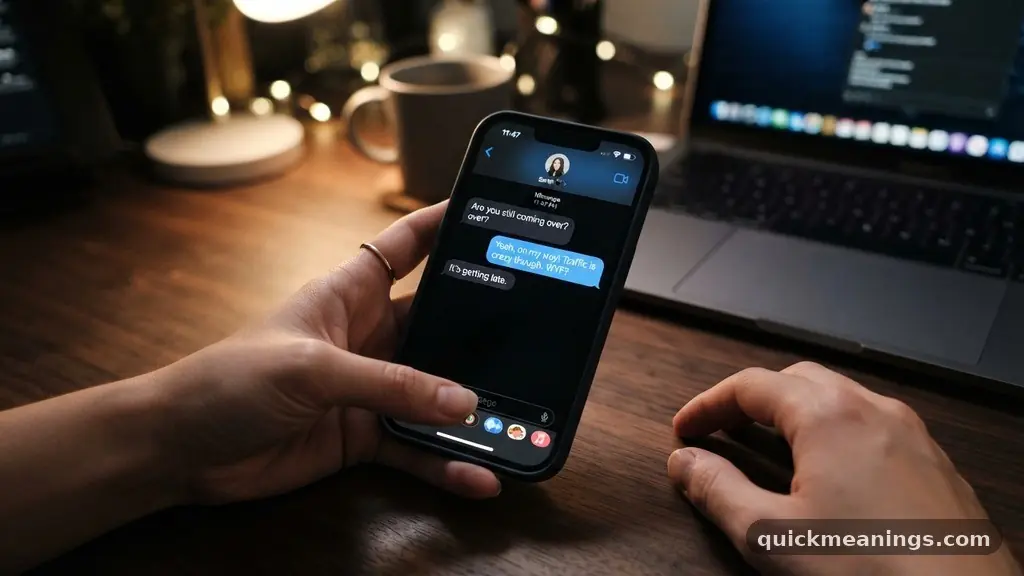
When you see a mysterious acronym pop up on your screen, it is natural to wonder about the WYF meaning in text conversations. Most commonly, this abbreviation stands for “What You Feeling?” or “What’s Your Feedback?” depending entirely on the context of your chat.
Understanding these digital shorthand terms helps you keep pace with modern communication, especially when you are interacting with friends or acquaintances on social media. This article breaks down how this slang is used in daily messaging, providing you with the clarity needed to respond confidently and keep your digital interactions flowing smoothly.
Decoding the Primary Meaning
The most frequent interpretation of the acronym in casual messaging is “What You Feeling?” This is a direct, albeit shortened, way for someone to inquire about your current mood, your opinion on a situation, or your interest in a specific plan. It functions as an open-ended prompt designed to get you to open up or share your perspective without the need for a lengthy formal question.
When a person sends this on a dating app or in a direct message on Instagram, they are usually testing the waters. They want to gauge your vibe or see if you are interested in continuing the current line of conversation. It serves as a low-pressure bridge between small talk and a more meaningful exchange.
Occasionally, you might encounter the variation “What’s Your Feedback?” in a professional or semi-professional setting. This is less common in pure slang circles but often appears in group chats where people are collaborating on a project or planning an event. In this instance, the sender is looking for your input or critique regarding a shared task.
Context Matters in Digital Communication
Because the acronym is ambiguous, you must look at the surrounding messages to interpret the intent correctly. If the conversation has been light and flirtatious, “What You Feeling?” is almost certainly the intended meaning. You should treat it as a conversational pivot rather than a demand for a deep emotional disclosure.
Conversely, if you are discussing a specific proposal or an idea, the interpretation shifts toward feedback. Pay attention to whether the sender has provided a specific topic before asking the question. If they have, your response should be focused on the subject matter at hand rather than your internal emotional state.
When you are unsure, it is perfectly acceptable to ask for clarification. A simple “Are you asking how I’m doing or what I think about the plan?” shows that you are engaged and value clear communication. Most people appreciate the honesty, as it prevents the misunderstandings that often arise from relying too heavily on internet slang.
How to Respond to the Question
Responding to this acronym depends on your comfort level and the nature of your relationship with the sender. If you feel positive about the direction of the chat, offer a direct answer that matches the energy of the question. You can be brief and casual, keeping the momentum going without overthinking your reply.
If you are not interested in the topic or the person, you can use your response to steer the conversation elsewhere. A vague or polite answer is often enough to signal that you aren’t ready to dive into the deeper question they are asking. You are never obligated to provide a vulnerable answer to a text message just because someone used an acronym to prompt it.
For those curious about the evolution of these terms, the evolution of slang in digital spaces is a fascinating study of efficiency. As we spend more time online, we naturally gravitate toward shorter forms of expression to save time and effort. This is why abbreviations like this one become so prevalent in our daily lives.
Common Scenarios for Using the Acronym
You might find yourself using this term when you want to check in on a friend who seems distant or quiet. It is a quick way to show you care without making the other person feel like they are being interrogated. By keeping the question short, you lower the barrier for them to share their thoughts.
It is also frequently used when making plans for the evening or the weekend. Instead of writing a long sentence asking if someone wants to go to a specific restaurant, a quick question allows you to gauge their enthusiasm level. If they respond with excitement, you can proceed with the details.
Examples of Usage
- “We were thinking of going to the beach later, wyf?”
- “I know you had a rough day at work, wyf right now?”
- “I just sent over the draft for the invite, wyf on the design?”
- “You seem a bit quiet today, wyf about the news?”
Comparison of Interpretations
Understanding the nuance between different interpretations helps you avoid awkward social interactions. The following table illustrates how the context changes the meaning of the acronym significantly.
| Context | Likely Meaning | Best Response Approach |
|---|---|---|
| Dating/Social App | What You Feeling? | Share your vibe or opinion |
| Work/Group Chat | What’s Your Feedback? | Provide constructive input |
| Deep Conversation | What You Feeling? | Be honest about your emotions |
| Planning an Event | What You Feeling? | State your level of interest |
Why People Use Slang in Texting
The primary driver behind the use of this and similar terms is the desire for speed. Typing on a smartphone keyboard can be tedious, and people often prefer to condense their thoughts into the fewest characters possible. This efficiency is a hallmark of modern digital interaction, especially among younger generations.
Beyond speed, slang acts as a social marker. Using the right shorthand can make you feel more connected to a specific group or community. When you use these terms correctly, it signals that you are “in the loop” and comfortable with the current norms of social media communication.
However, you should avoid overusing these abbreviations if you want to maintain a clear and authentic voice. Over-reliance on slang can sometimes mask your true personality or make your messages feel impersonal. Balance is key; use these tools to facilitate conversation, not to replace your unique way of speaking.
Navigating Potential Misunderstandings
Misunderstandings are an inherent risk when using text-based communication. Because you cannot see the other person’s facial expressions or hear their tone of voice, the intent behind a message like this can easily be misread. If you find yourself in a situation where the meaning is ambiguous, assume the best intent.
If you suspect someone is using the term in a way that is confusing or slightly off-putting, take a moment before you reply. Giving yourself a few minutes allows you to craft a response that is measured rather than reactive. If the person is a close friend, you can even joke about the abbreviation to lighten the mood.
Remember that slang is fluid and constantly evolving. What is popular on Instagram today might be replaced by a different term in a few months. Being adaptable and willing to learn new terms as they appear is part of the experience of being an active participant in digital culture.
Frequently Asked Questions
What does it mean if a guy sends this to me?
If a guy sends this on a dating app, he is almost certainly asking about your interest level or your mood. It is a casual way to move the conversation forward without putting too much pressure on you to write a long paragraph. You can respond with how you are feeling about the conversation or the prospect of meeting up.
Is it rude to use this acronym in a professional chat?
It is generally better to avoid using this type of slang in formal professional emails or project management tools. If you are in a very casual startup environment where team members communicate via Slack or Discord, it might be acceptable. However, “What are your thoughts?” is always a safer, more professional choice.
How do I respond if I don’t want to answer?
You are never required to answer a question that makes you uncomfortable. You can easily pivot the conversation by saying something like, “I’m still thinking about it!” or by asking them a question in return. This keeps the conversation going without forcing you to share feelings you aren’t ready to discuss.
Does it mean the same thing on TikTok?
Yes, on platforms like TikTok or Snapchat, the meaning remains consistent with the “What You Feeling?” interpretation. Users typically use it in the comments section or in private messages to gauge reactions to a video or a shared trend. It is part of the fast-paced nature of these platforms.
Final Thoughts on Modern Messaging
Mastering the WYF meaning in text communication is a small but useful skill for navigating today’s social landscape. Whether it is being used to check your mood or to ask for your opinion on a project, the core goal is simply to bridge the gap between two people. By staying aware of the context and being willing to clarify when things get murky, you can ensure your digital interactions remain positive and productive.
Don’t be afraid to embrace the shorthand, but keep your own personality at the center of your messages. If you are ever unsure, a quick follow-up question is the best tool in your kit for keeping the dialogue open and friendly.